Stop Cyberattacks Before They Start: SteelBinary Security Assessments
In the ruthless Wild West of cyberspace, data breaches and cyberattacks are a constant threat. A staggering 800,944 cybercrime complaints were filed with the FBI’s Internet Crime Complaint Center (IC3) in 2022 alone, resulting in potential losses exceeding $10.2 billion. For organizations of all sizes, maintaining a robust cybersecurity posture is no longer optional, it’s a critical business imperative.
This is where a cybersecurity assessment steps in, acting as a vital first line of defense.
Why a cybersecurity assessment is essential
Think of a cybersecurity assessment as an MRI scan for your IT infrastructure. It methodically examines your systems to find vulnerabilities, weaknesses, and gaps an attacker could exploit. Why it’s non-negotiable:
- Proactive threat detection: Finding and patching vulnerabilities before criminals reach them significantly reduces the risk of a breach. The average cost of a data breach involving stolen records has been measured at $4.24 million [IBM].
- Improved security posture: An assessment gives you a clear, objective picture of where you stand, so you can spend your security budget on the weaknesses that matter most.
- Compliance requirements: Industries such as healthcare (HIPAA) and finance (PCI DSS) mandate regular assessments to protect sensitive data.
- Peace of mind: Knowing your systems are fortified lets you and your stakeholders focus on the business.
The types of assessment, and which one you need
“Security assessment” is an umbrella term. The right one depends on your goal:
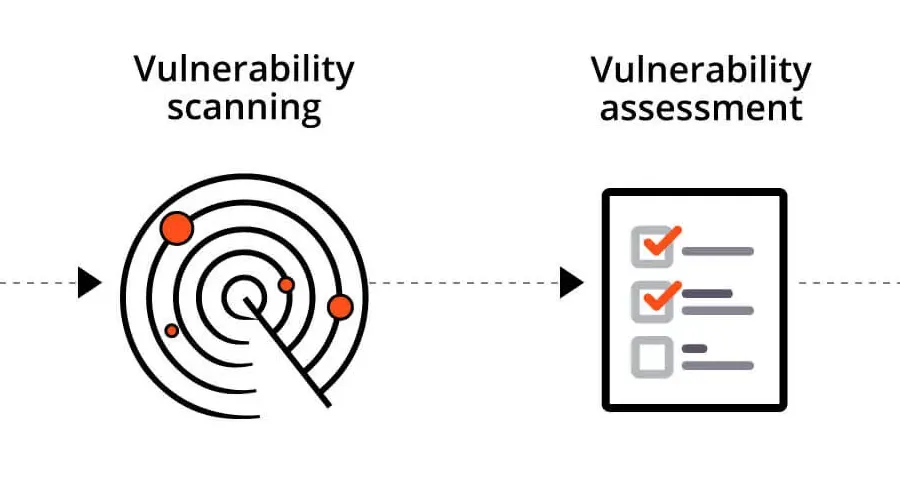
- Vulnerability assessment: A broad, largely automated scan that catalogs known weaknesses and misconfigurations. Good for regular hygiene and a baseline.
- Penetration test: A hands-on, simulated attack that chains weaknesses together the way a real adversary would. It finds what a scanner misses, but it’s deeper and more targeted, so it’s usually scoped to your most critical systems.
- Risk assessment: A higher-level review of policies, processes, and business impact, often what compliance frameworks actually ask for.
Most organizations need a combination: regular vulnerability scanning for coverage, periodic penetration testing for depth, and a risk assessment when a framework or a board asks for one. If you’re unsure which applies, that’s a good first question for a call.
How often should you run one?
A practical rhythm for most businesses: vulnerability scanning on a recurring schedule (quarterly is common), a penetration test at least annually and after any major change to your systems, and a fresh risk assessment whenever your compliance obligations or business model shift. Attackers don’t wait for your annual review, so cadence matters as much as depth.
How to prepare (and get more out of it)
You’ll get a far more useful assessment if you walk in with an inventory of your systems and data, a sense of what matters most to the business, and the right people available for a short interview. Knowing what you’re protecting and why lets the assessment focus where the real risk is instead of treating every asset as equal.
How SteelBinary helps: the Threat Protection Engagement
We offer a comprehensive Threat Protection Engagement, a customized assessment designed around your organization’s specific risks. It typically involves:
- Collaborative interviews to understand your security needs, business objectives, and existing controls, so the assessment is tailored to your environment.
- Exhaustive vulnerability scanning using industry-leading tools to find known weaknesses and misconfigurations.
- Security policy review to confirm your policies and procedures are effective and current.
- Penetration testing (optional) that, with your permission, mimics real-world attacker tactics to surface exploitable weaknesses scans miss.
Reading the report: prioritize by risk, not by count
A long list of findings is only useful if you know what to fix first. Our report ranks each finding by real business risk, not just a raw severity score, and pairs it with concrete remediation steps. The goal is a short, ordered action plan, the ten things that actually matter and the order to do them in, rather than a 200-page document that overwhelms your team. That’s the same philosophy behind our Fortified Cybersecurity Solutions.
Taking the first step
A cybersecurity assessment is an investment in your organization’s most valuable assets: its data and systems. Don’t wait for a cyberattack to become a costly reality. Call SteelBinary at +1 (236) 558-4389 or contact us to discuss your needs and scope a Threat Protection Engagement. Have questions first? Our FAQ covers how assessments, pricing, and engagements work.
Need help with this?
Talk to the SteelBinary team about your specific situation.